I finished testing three black boxes on the STD4. I cased them and re-tested. All checked good so I put the tamper proof stickers on them and added to stock. These sell fairly quickly and sometimes it’s all I can do to keep up. The black boxes are the best spares one can buy for their microlog jukebox. Microlog is a term for any juke that uses the black box.
I repaired an old six digit Bally pinball display for Jeff’s Eightball pinball. I hadn’t worked on one of these for 20 years. All digits were missing one segment of display. That’s a pretty good indicator of a bad chip and indeed; when I looked at the chip the top of it was bulged and cracked. I replaced the CMOS BCD to 7 segment driver chip and I’m sure it will check fine. There are two other “must check” areas on these displays. First is the solder cracks you are certain to find around the pins on J1. The other are the six 100k 1/2w resistors used for each digit. I was surprised by how quickly this information came back to me but I had worked pretty intensely on pins back in the day.
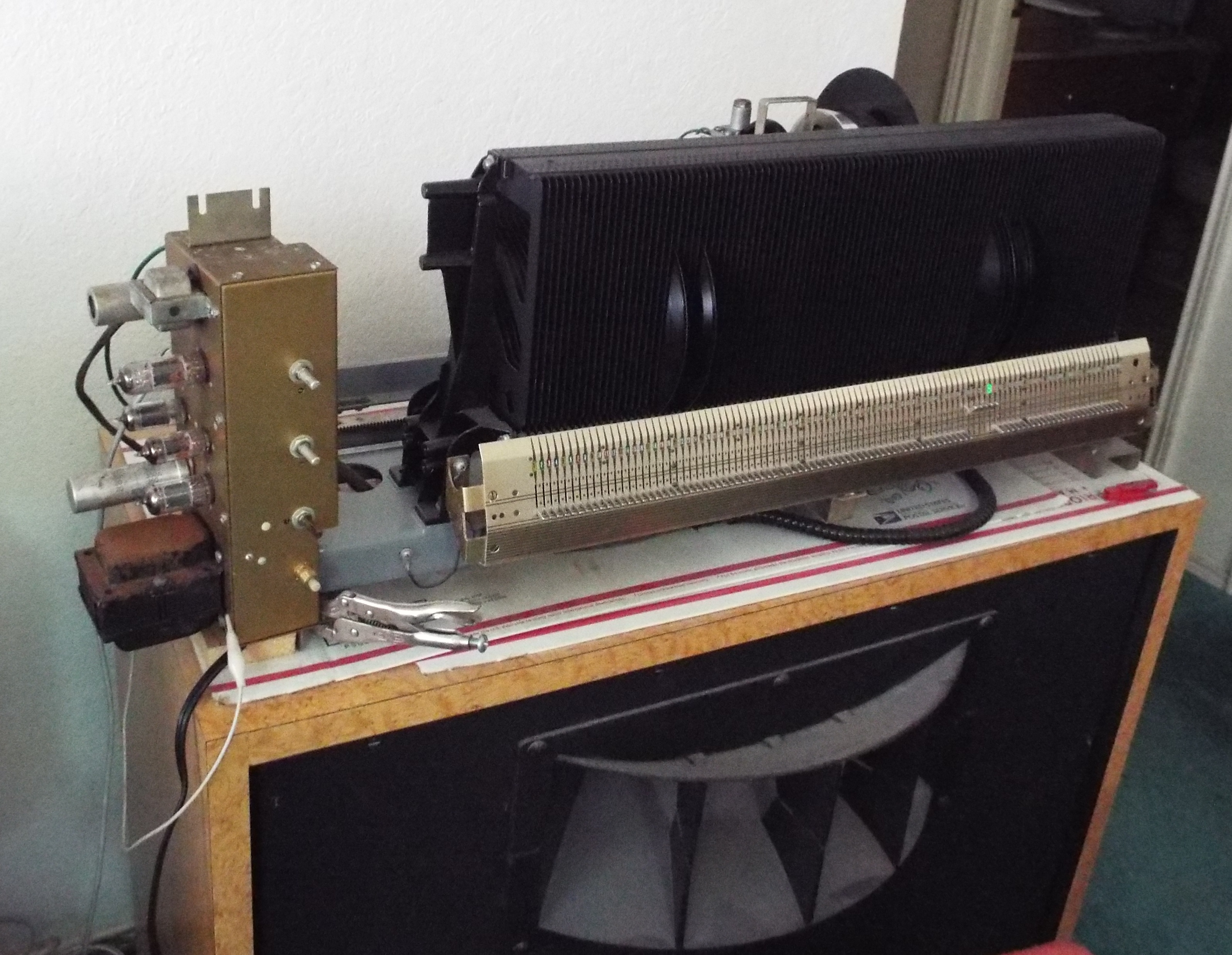
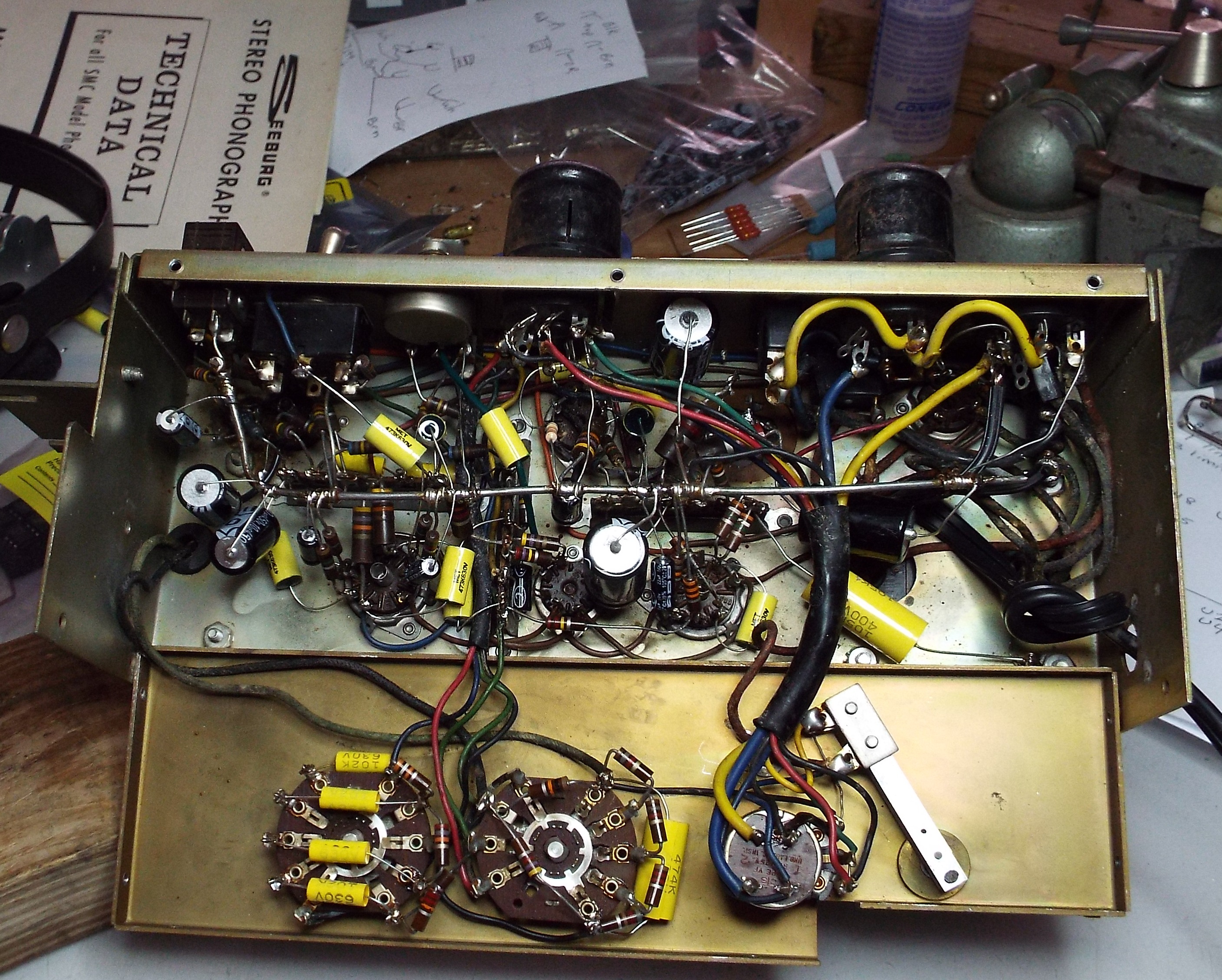
The PA-4 Library Unit pre-amp got finished. I was done recapping it and decided to check the can voltages to see if I could get by with the stock one. One section was about 230v-almost a hundred volts low, the other two section voltages were ridiculously low reading about 70v instead of about 250v. I had a bad can capacitor. I used three 22uf 450v axial caps to replace the can while leaving it in place for looks. This has become standard operating procedure on every tube amp. The cans are scarce and when you can find them too expensive. I used to not replace the three and four section cans but they all leak too badly anymore. I tested the unit on the semi-permanent outboarded Library Unit on top of my what else? Seeburg speaker. It lives under a towel when not in use. I run the pre-amp through the stereo system to the speakers. Being a pre-amp it cannot drive a speaker by itself.
 My Seeburg Life