SMC 3 Light Organs
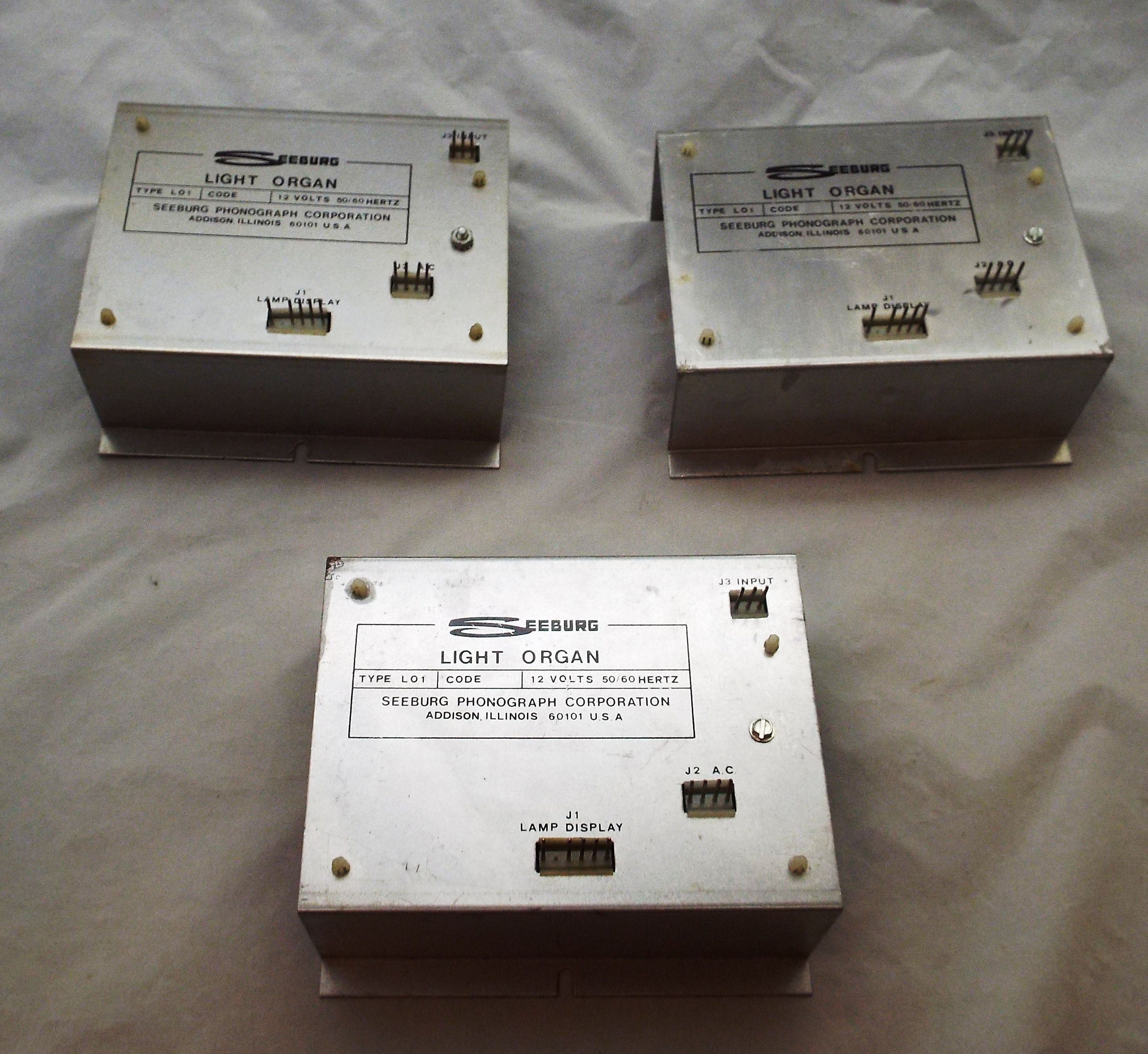
Several weeks ago I made a rare buy on ebay. I picked up three Seeburg LO1 Light Organs used on the SMC3. One of the major reasons I like the SMC3 so much is its light show. The lower door has 36 fingers of varying length mounted to a mirror finish chrome panel. Each finger has a small lamp at its end. The light organ makes the lights beat in time to the music. It takes an audio signal from the volume control and parses a bass and treble response from that. They work in sections and look cool. I’ve never seen one of these LO1’s for offer much less three. I snabbed them quickly. My plan was to refurbish them and put them up for sale. A big part of what I do nowadays is renovate Seeburg electronics and resell. It’s a much easier proposition when I actually have an SMC3 to test these with as well.
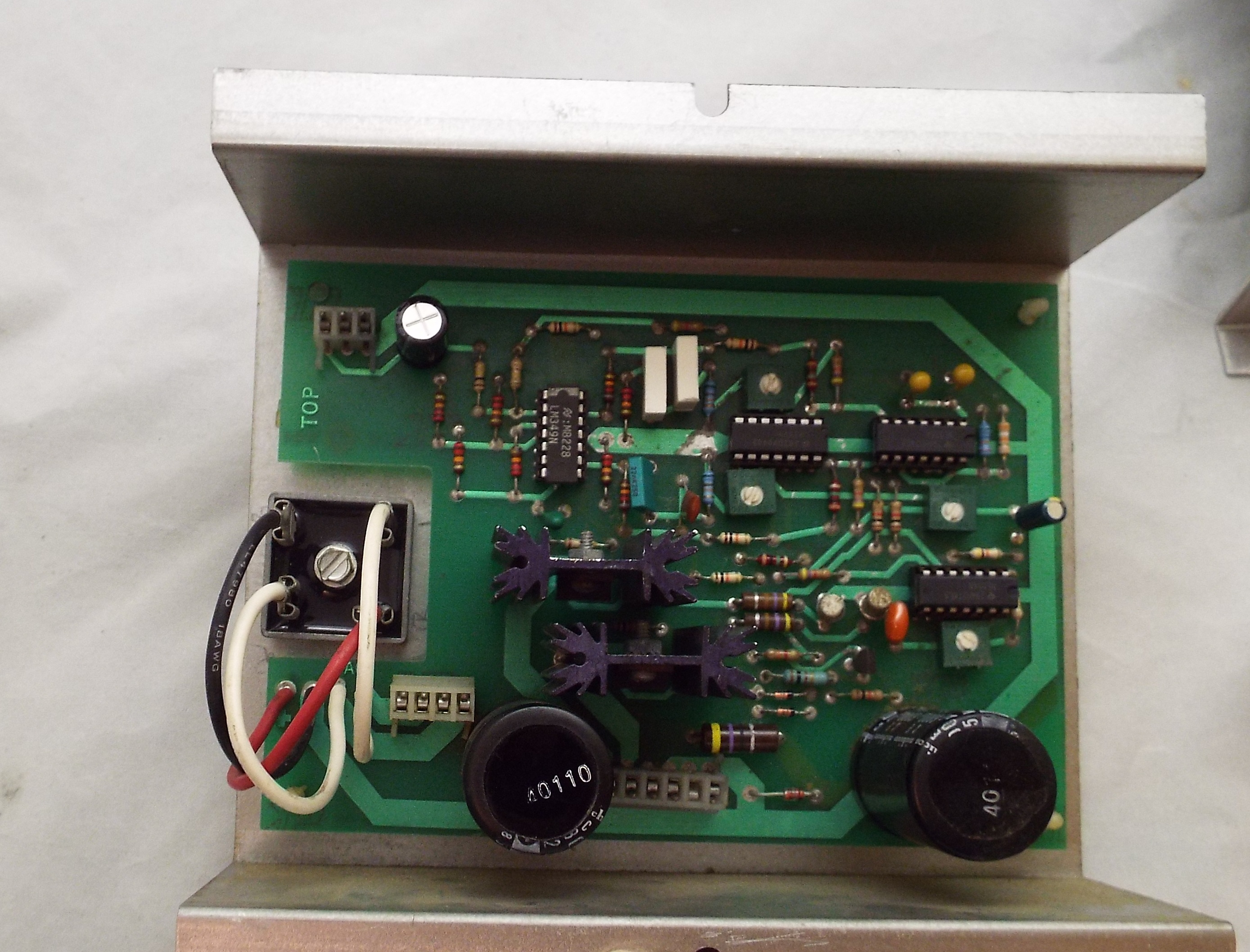
Visual inspection is always the first step. These looked reasonably OK. Dirty. I knew I would be changing the small electrolytic capacitors. That was the first step. I then tested these. One of them actually worked. The other two did not. I made up my mind to “shotgun” these. That is an old term for the shotgun approach in that you will ‘hit” something or in this case fix the problem by blindly replacing components. It is actually a good approach in certain circumstances. It takes a lot less time to replace the four IC’s on each board than to try and troubleshoot the boards down to the actual component. When I worked for an outfit repairing telecomm boards getting $400-600 per repaired board this was an accepted practice. Twenty dollars worth of components and a few hours work for that kind of money per board? A no-brainer. And, one of the reasons your internet, cable, and phone bill are so high. [Editor’s note: Someone asked me how I could walk away from 4-600 a board. It was the people I worked for that made that kind of money. I received a mere pittance per hour.]
As mentioned these boards only had four IC chips each. Two NE556 dual timing chips, one LM339 Quad comparator, and one LM349 Quad op amp. Apparently this light organ uses four channels for four sections of two bass and two treble. Getting a schematic for this was next to impossible. Tracking the IC’s down can sometimes be a problem. I was able to order one chip on Mouser. I went to ebay and got the rest from several different sellers at a good price. Most electronic components are very cheap. Having to rely on ebay or even China has been the result of “obsoleting” used by suppliers such as Mouser or Digikey. With design changes over the decades since these LO’s were built TTL circuits just aren’t in use much anymore. Almost everything is now processor and software driven. Processors can have all these chips and more onboard. Look at the interface board in the SMC PCC and then look at the replacement board Victory Glass now sells and you will see what I mean. Surface mount components reign supreme.
So….I ordered replacement chips for the boards. I had to order a few values of the small caps and had decided to replace the tantalum capacitors as well. I even found new old stock 50K Cermet replacement pots and ordered those as well. Identical to those used on the boards. This pleased me for some reason. While waiting for the goodies to arrive I carefully removed the chips. I use a process now whereby I use a small pair of dykes, actually known as IC cutters back in the day, to cut out a chip by severing each leg then desoldering what’s left. This minimizes heat exposure to the solder pad. I’ve lifted my share of solder pads from too much heat and can be no fun dealing with. This method works well. I replaced what capacitors I had in stock and did a little board and connector cleaning.
After receiving my supplies and finishing the boards I was quite pleased to have all four, the three ebay survivors and the original out of my SMC3 , working. The two that didn’t work? Best guess is a chip was bad.
 My Seeburg Life