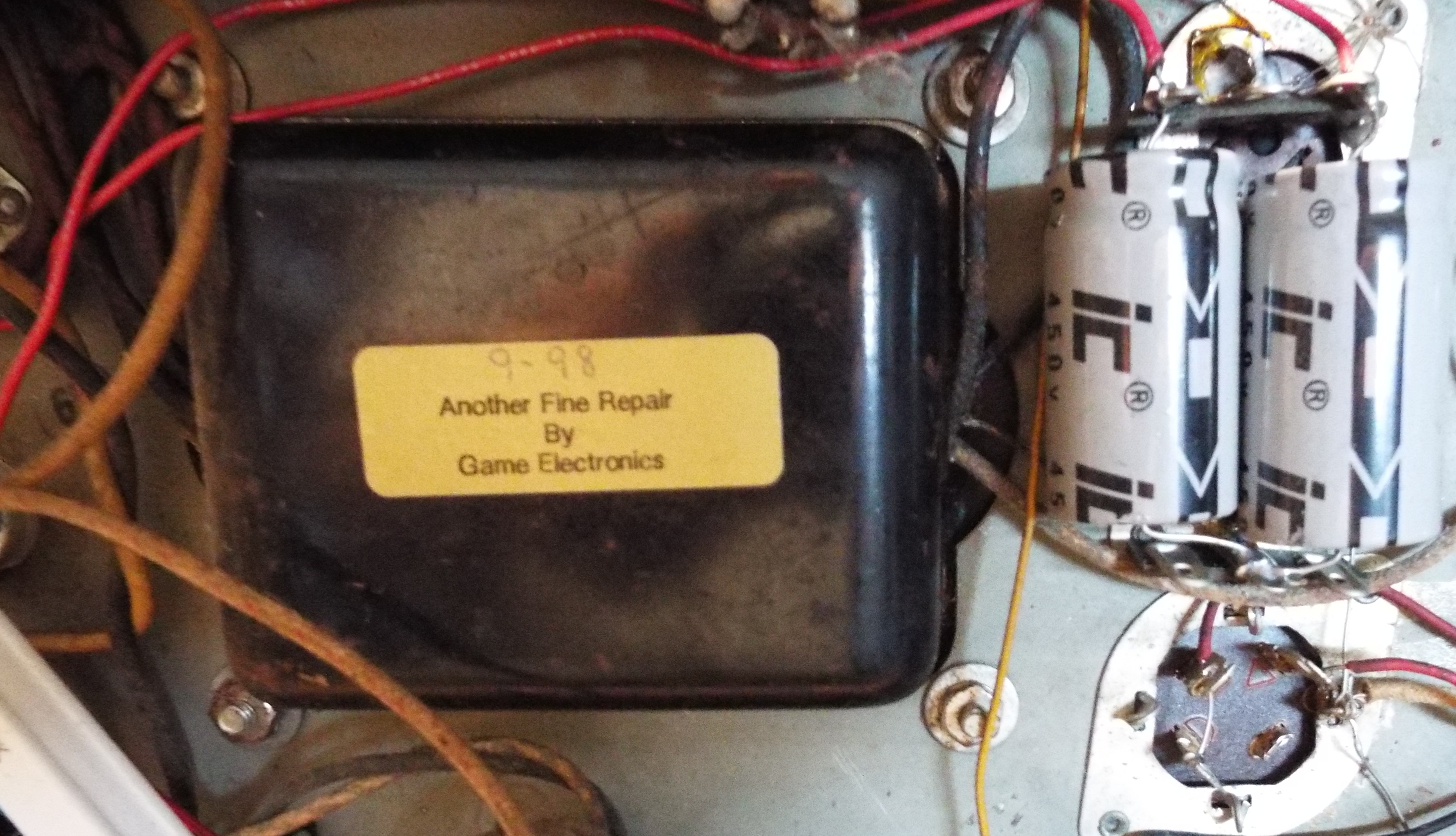
I pulled the amp out of the New G to bench test. I got a surprise when I turned it over to inspect. It had one of my stickers on it from 1998. I remember getting those stickers. I ordered the return label stickers from some outfit and used the three lines for a cheap custom sticker. This is while I was in business for myself at the Seagoville shop. I did a lot of BeBop’s jukeboxes. I’d usually do the backdoor electronics consisting of the amplifier and selection reciever, the electrical selector or push button assembly, and the pinbank.
I pulled the tubes and they tested good. I ran the amp without the AVC tubes, the 6SK7 and 6SL7. I rarely use those. Not really needed with the advances in record pressing in later years. Mounted the amp on the bench and fired it up. Great sound. Gratifying to see a 30+ year cap job still doing its duty.
I took a break this morning to go to my favorite glass company, Country Glass, right here in Mesquite to get a glass cut for the DEC wallbox I had recently received through ebay. It is complete, looks good, and I plan on using it with the SMC2 coming up. However when I got it I discovered no front glass! The seller was cool about it and admitted he listed items but didn’t always see them and refunded $25 back to me. This was enough to pay for the glass. Country Glass is quick and very reasonable and had it cut by lunch. I spent about 30 minutes getting it mounted plus remounting the glass I had pulled from another DEC for a pattern.
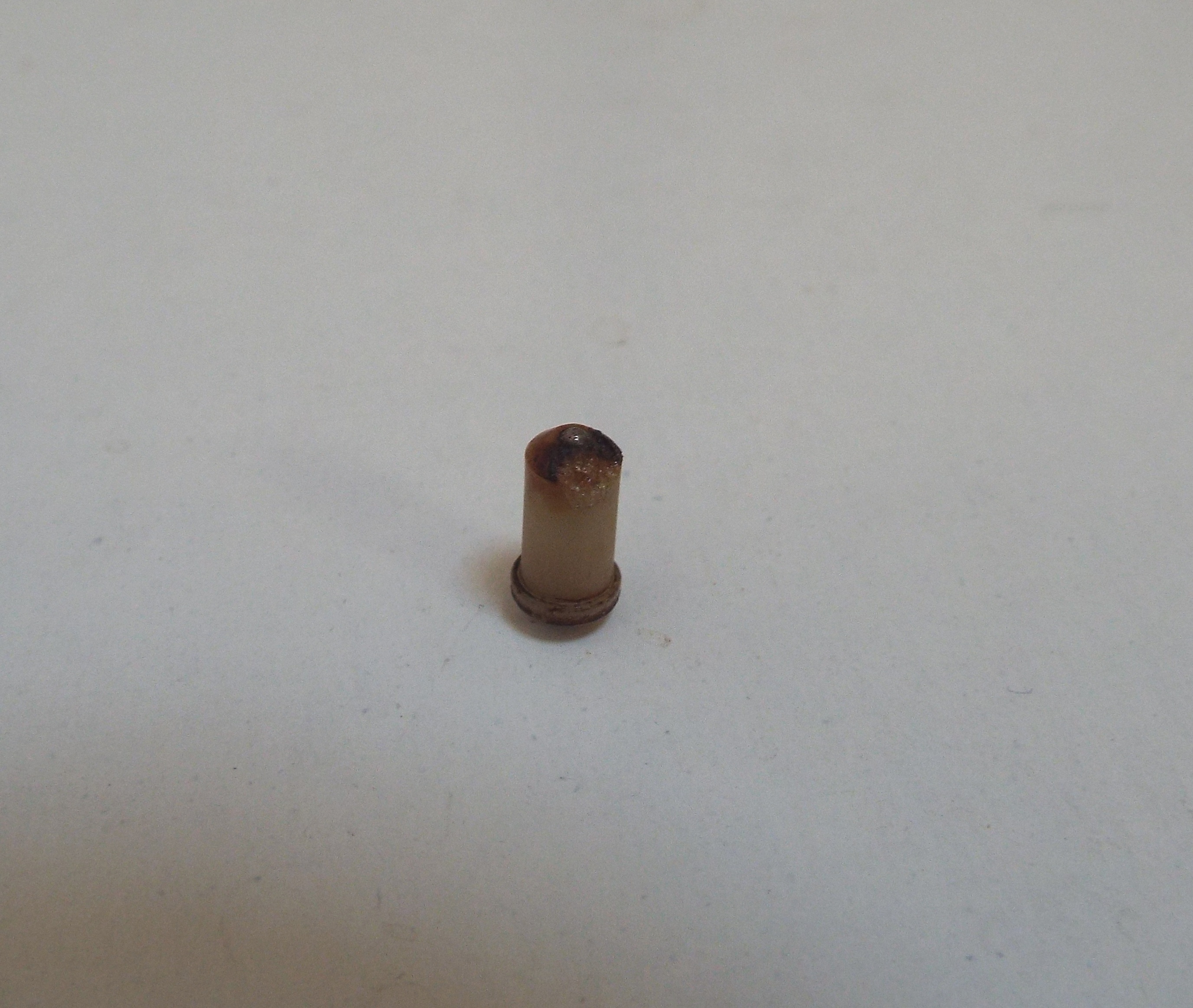
In the evening I finished the New G pinbank I had started the evening before. I like to get off the couch about 9pm and do an hour or so of work before bed. The pinbank had a bad burn spot at A7 underneath on the metal frame. That coupled with the very badly burned contact pin had me worried. I’ve never seen one of these burned much less as badly as it was. It’s like the mech got stuck at A7 and arc welding commenced. Earlier in the day I had put out a request for a replacement contact pin on The Seeburg Jukebox Collector site on FB. My buddy Dan P. from California came through for me and it was quite a relief. I did not think I would find one of these very easily.It’s on its way.
It’s not unusual to have one or even several burned selection coils in the pinbank. I expected this one to have at least a couple. However, I opened the bottom of this little beauty up and no burned coils! Someone had replaced the pinbank but kept the original bottom frame with its burn spot. All 100 coils looked good and this is always a relief. Still very worried. What caused that burnt contact pin? The electrical selector would get a close inspection when its time came. The proof of the pinbank being replaced was the willy nilly assembly of the selection pins and the contact plates. These all go a certain way. They are all stamped pieces and if you look closely it’s easy to tell which are the stamped sides. The rounded side of the lever goes toward the coil. Because of stamping the squarish contact washers have a side with edges which goes down. An easy way to tell is to look at the notch-it isn’t centered and the “little” end goes to the right. These need no added friction. I found this out the hard way.
I have restored/shopped out/refurbished/ whatever ya call it more than my share of pinball machines. Usually the springs especially on the electromechanicals get a little weak and it was my habit to give them a little stretch here and there as needed. My first pinbank it sure seemed the springs under the levers were somewhat collapsed and weak. So I gave all 100 a little stretch and assembled the pinbank. I use an old Gottlieb pinball transformer for 25 volts AC with a couple of old test leads to bench test the pinbank coils. None of the individual levers would move. The “little stretch” I gave the springs was just enough added friction that the small coils couldn’t pull the pins. I had parts pinbanks and quickly replaced all the springs I had stretched. So, since then I have been very vigilant about added friction in a pinbank.
After assembling the pinback I broke out the old Gottlieb transformer and leads and quickly tested the five group plate magnets and all 100 of the selection coils. The smell of ozone wafted up as I hit each conact with my leads and listenened for the click as the coils pulled each of their levers. The group coils are unmistakably loud as they pull in. Electromagnetism at work. All is good.