Seeburg Caster Fun
In addition to ruining a fine Samsung Plasma television Mayflower Van Lines also knocked a a caster off the bottom of my STD4 test machine. Seeburgs and their casters….More often than not Seeburgs do not roll well at all. The older “hat” style sockets in the 50’s machines often tilted jamming the caster. A more common problem was the bearings falling out allowing the caster to lean instead of standing straight. There was so little clearance around the caster wheel that this allowed the caster to rub against the case. This is particularly bad on the 70’s jukes that had the square steel boxed inset casters. They rubbed against the metal case. The slightly later STD 3 and 4 had actual platform casters.
I set out to repair the STD4 caster problem one fine PNW morning. The first thing to do is get it on its back. I took the relatively heavy SHP amplifier out, removed the mechanism, lower front door, and titlestrip lid to lessen the weight. Using a two-wheeled dolly from behind I gently lowered the dolly with the juke to the ground. The front right caster was the culprit. The actual problem was a little more sinister. The jukebox had been dropped, apparently on this particular caster, most likely rolling down a ramp and while the wooden bottom didn’t break it darn sure bent. I removed the caster. It was fine and could be re-used.
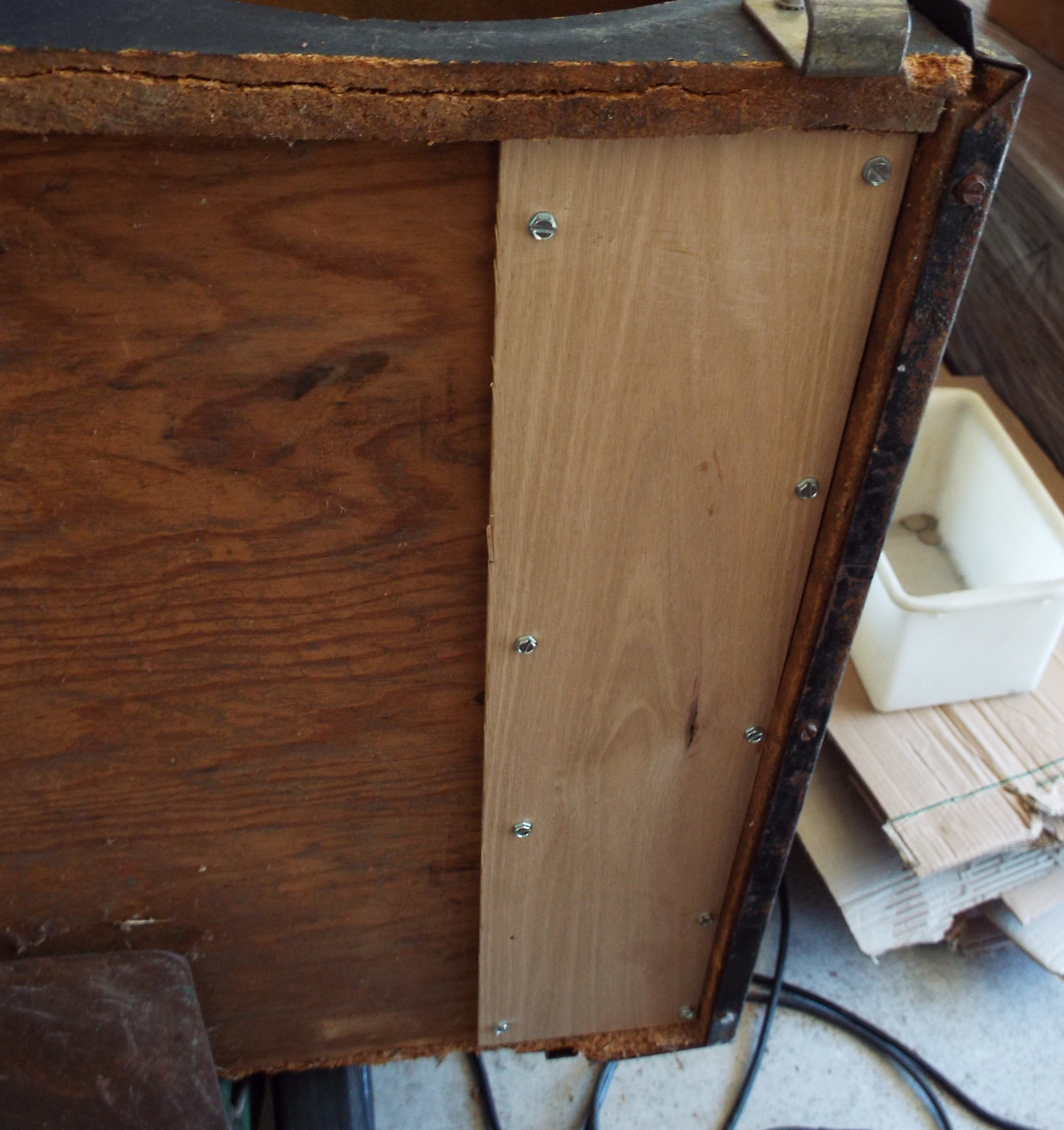
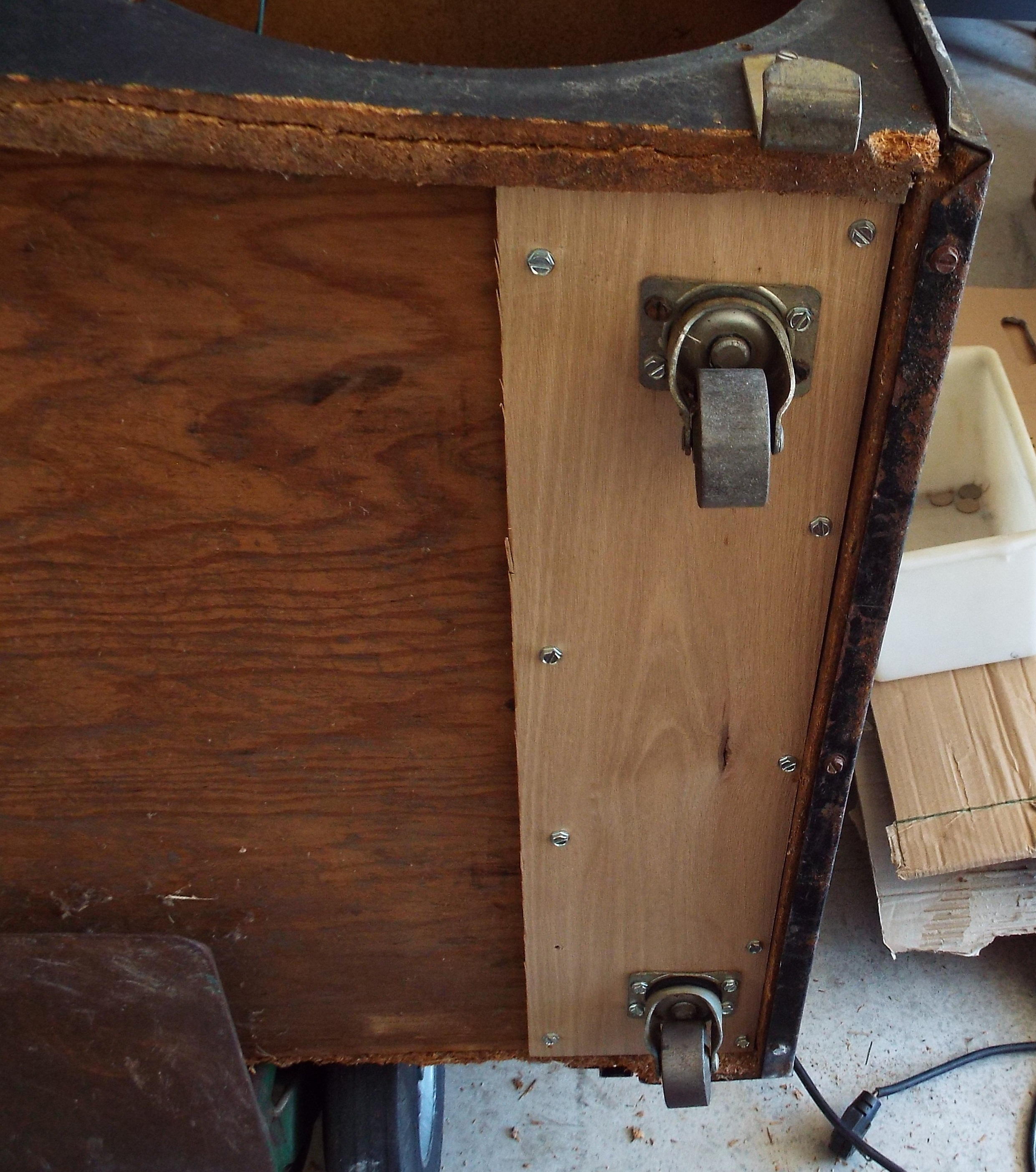
I removed the right side bass speaker for an internal inspection. Using a two pound sledge I tried to hammer the bottom back flat to no avail. Now I was stuck. I couldn’t re-mount the caster a few inches over. It would still be at an angle because of the bent bottom. The solution finally dawned on me. I went to the local Lowe’s and found a nice piece of 1/2″ thick two foot long wooden board. Back at the garage I cut it to fit and screwed it over the bent part of the jukebox bottom. I like this solution because there was plenty of good flooring to screw the board to and made for a strong repair. I remounted the two right side casters and it was up and rollin’ once more. The right side is a quarter inch higher than the left but it won’t hurt anything.
Back in January or February a fellow put a STD3 up for sale on Facebook for a decent price. He lives in Tacoma. While messaging about it we struck up an aquaintance. I told him I’d like to buy it but that I wouldn’t be in the area, Vancouver, for several months. He nicely agreed to hold it for me. This juke had been on the back of my mind ever since. I eventually made it to my new home in Vancouver and as soon as possible made arrangements to pick it up from David.
I set out in the pick’em up truck up I5 to Tacoma on another fine PNW morning. A little over two hours later I pulled up to David’s house and met a fine fellow. He showed me around a very interesting shop/ garage complex. He has several jukeboxes up and running all filled with records and all played often. He is an interesting fellow. He has a beautiful yard filled with a myriad of plants. He has done all the landscaping and planting. He introduced me to pineberries-strawberries that are white in color and have a distinct pineapple flavor. In fact he sent me back with some rooted plants that are slowly growing in one of my flower pots.
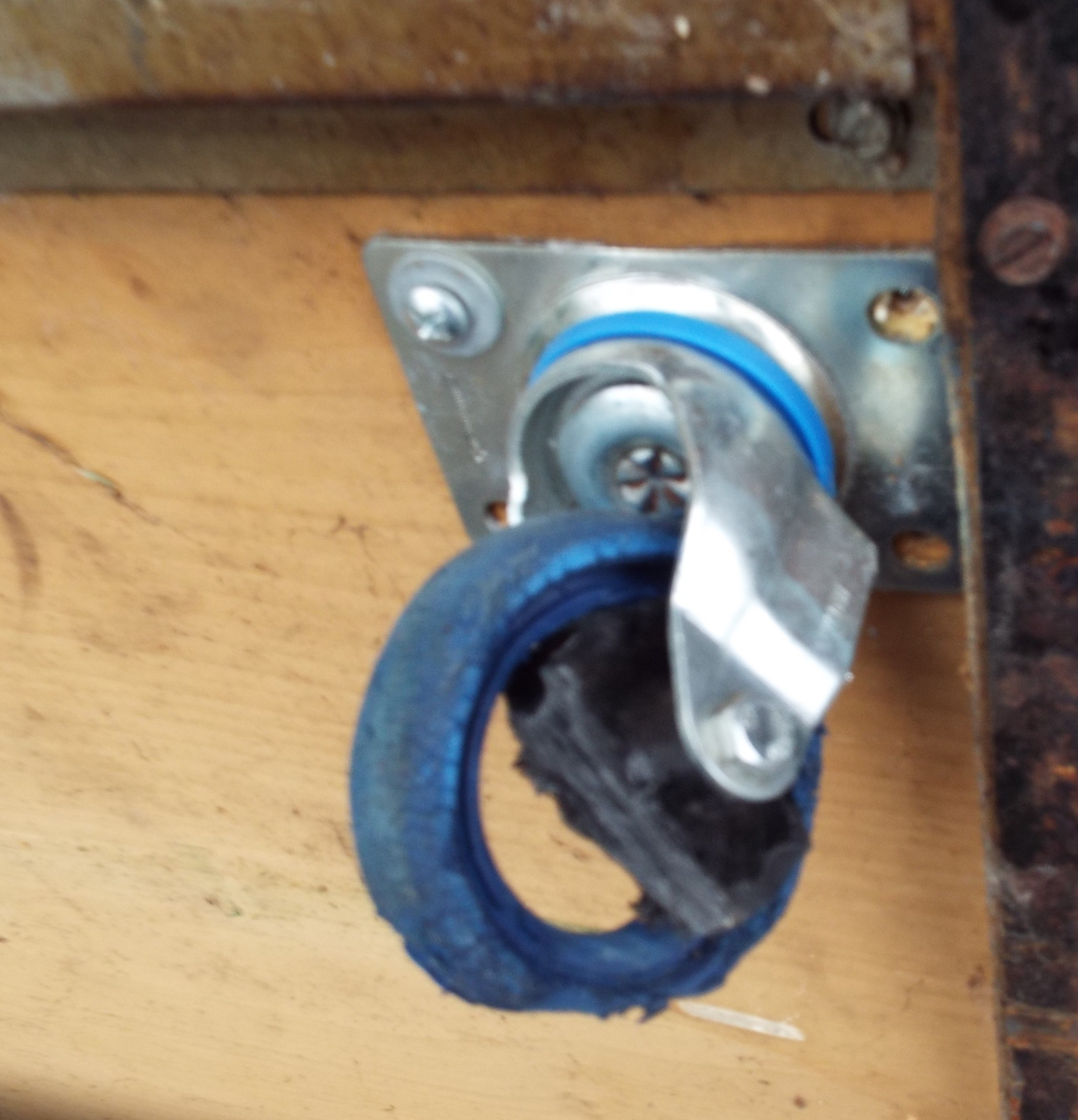
I saw his cool as hell Star Wars collection, some rare Holley carbs, and a few little inventions. He has a fine hotrod. Anyway we finally made it to the jukebox and it was good to go. Very clean. I won’t have to do a whole lot to this jukebox to get it ready to sell. He even added custom LED lights to it that change color and tempo. Pretty neat! Sure enough though, tried moving it and it rolled “lumpity lump”. We got it on its back in the truck. One of the rubber wheeled casters someone added had shredded. I’ve tried rubber wheels as well one time. They cannot handle the load. Even hard plastic wheeled casters will shatter or have chunks come off. Stick to iron my friends.
So, one fine morning, ( it’s been a beautiful summer ) I set out to replace the casters on this STD3. I had gone by Harbor Freight Tools the day before and picked up four iron two inch casters that had an actual installed height of three inches. Perfect! And then a 30 minute job stretched into an hour and a half.
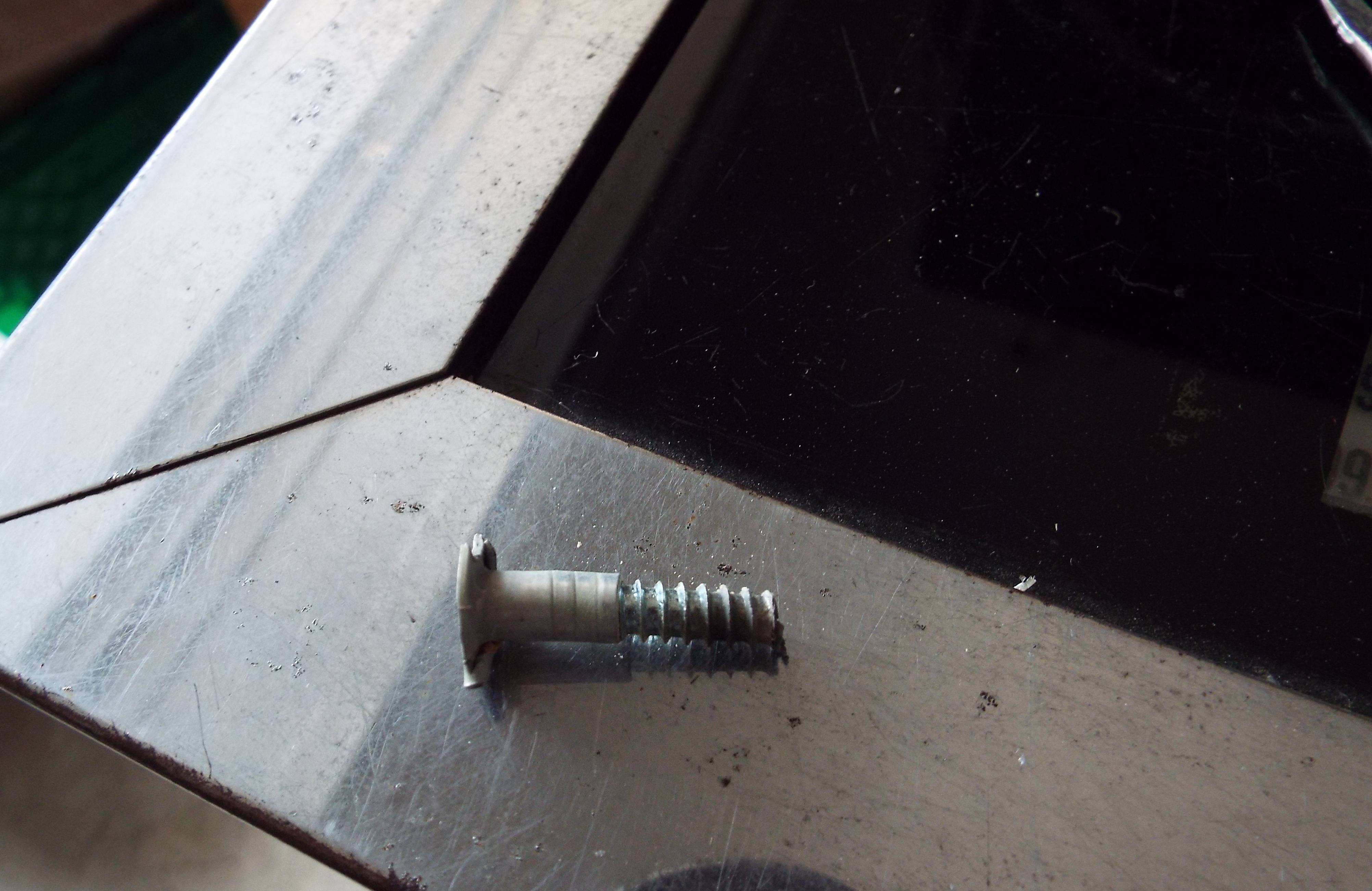
I got the juke on its back same as I did the STD4. Started removing casters or tried. Every one of them had a screw that had been forced into one of the T nuts Seeburg used to secure these casters. I removed both bass speakers. Shoot, one of them had a screw that wouldn’t release. Its T nut just spun. I couldn’t really get behind it to hold because of the speaker so I ended up using a Dremel tool with a cutoff wheel and X’ed the head. Using a chisel and hammer I knocked the hex head pieces off and pulled the damned screw out. I tried various ways to unscrew the stuck screws. There just wasn’t any way to hold the T nut and unscrew the stuck screw. The progression of increasing force was typical. First a pair of needle nose pliers to try and hold the errant T nut, then regular pliers, water pump pliers with their increased leverage, and finally Vice Grips. Nada. No luck.
So, I got serious. Broke out the side angle grinder with a cut off wheel, the big-boy version of the Dremel setup used on the speaker screw, and X’ed the bottoms of the four damned lag screws stuck in the damned T nuts. Once all were freed the job became rather straightforward. I mounted the new casters keeping them in the same locational area but arranged so none of the old holes and T nuts were used. Screwed ’em down with hex head #10 screws. Used a new T nut, screw, and washer in the one speaker hole. Wrapped it all up, got the juke upright and it rolls fine on the new iron casters. Just another day in My Seeburg Life.